 +1 289 719 0290
- Progressive Cargo Inc-855 Matheson Blvd East, Unit 1B, Mississauga, ON, L4W 4L6
 +1 289 719 0290

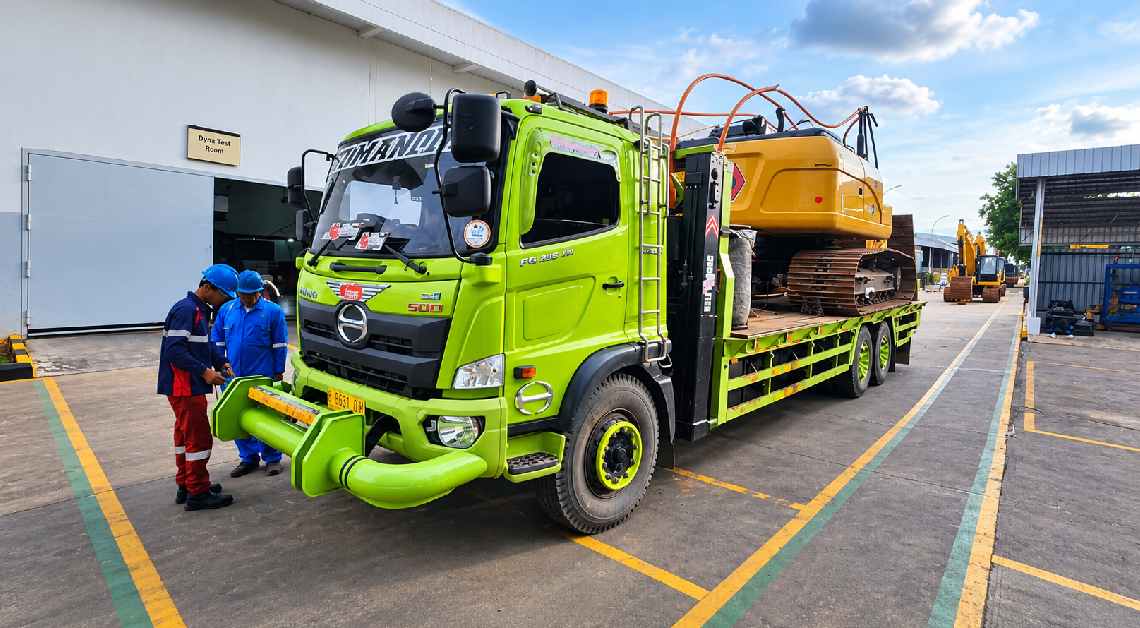
Moving heavy equipment across the United States takes considerably more planning than arranging a standard truckload shipment. An industrial generator, construction excavator, turbine, or large reactor may require specialised trailers, route assessments, transport permits, and carefully coordinated loading and unloading. One overlooked detail can affect the entire delivery schedule.
For a logistics company USA businesses depend on, heavy equipment transportation involves coordinating cargo dimensions, gross weight, road restrictions, equipment availability, and delivery requirements before the shipment moves. It also means accounting for the practical challenges that arise along the way, from bridge clearances to changing weather conditions. At Progressive Cargo, we support specialised freight movements through heavy haul and over-dimensional trucking solutions designed around the cargo, route, and operational requirements.
The objective is straightforward: move oversized or overweight equipment safely, legally, and efficiently from its origin to its destination.
Understanding Heavy Equipment Transportation
Heavy equipment transportation involves moving machinery or industrial cargo that exceeds standard vehicle weight or dimensional limits, or that requires specialised handling because of its size, shape, or value.
Common examples include:
● Excavators, bulldozers, and other construction machinery
● Industrial generators and turbines
● Reactors and manufacturing equipment
● Mining and agricultural machinery
● Large structural components
● Oversized project cargo
Not every heavy shipment is legally classified as an oversized or overweight load. The applicable limits depend on the vehicle configuration, cargo dimensions, total weight, axle distribution, and state regulations. Identifying these requirements early helps determine the correct transport method.
Choosing the Right Trailer and Transport Equipment
The equipment used for a shipment affects safety, loading requirements, road suitability, and overall transport cost. A trailer that works for one machine may be unsuitable for another, even if their total weights appear similar.
Equipment Type | Typical Application |
Flatbed trailer | Machinery within suitable loading and dimensional limits |
Step-deck trailer | Cargo requiring additional vertical clearance |
Lowboy trailer | Tall construction machinery and heavy equipment |
Extendable trailer | Long industrial structures or oversized components |
Multi-axle configuration | Certain exceptionally heavy loads requiring greater load distribution |
The final choice depends on the cargo’s dimensions, centre of gravity, loading points, ground clearance, and weight distribution. Loading ramps, cranes, winches, and other equipment may also be necessary.
At Progressive Cargo, we consider these requirements when coordinating heavy haul transportation, helping ensure the proposed equipment is appropriate for the shipment rather than selected on weight alone.
Permits, Route Surveys, and Regulatory Compliance
Heavy equipment transport in the US is governed by federal requirements and state-specific rules. A load that can travel legally on one highway may need additional approvals after crossing into another state.
Depending on its dimensions, weight, and route, a shipment may require oversize or overweight permits, pilot or escort vehicles, and restrictions on travel times. Some routes also need engineering assessments before approval.
Before dispatch, our planning process considers:
● State permits and approval timelines
● Bridge weight limits and axle distribution
● Overhead clearances and road width
● Tight turns, gradients, and access restrictions
● Escort vehicle requirements
● Weather conditions and seasonal road restrictions
Permit requirements should be confirmed for every jurisdiction along the planned route. Assuming that one permit covers the entire journey can create avoidable delays.
Route Planning and Load Engineering
The shortest route is not always the safest or most practical one for heavy equipment.
A road with low bridges, narrow turns, weak infrastructure, or restricted access may be unsuitable even when it offers the fastest standard driving time. Route planning must account for the actual dimensions and weight of the loaded vehicle, not just the machinery itself.
At Progressive Cargo, we assess route feasibility alongside cargo specifications and equipment selection. For particularly complex project shipments, technical drawings and loading plans can help establish how the cargo should be positioned and secured.
Our approach also considers axle configuration and weight distribution. Excessive loading on individual axles can affect vehicle stability and compliance with road restrictions. Proper load distribution helps protect the equipment, the vehicle, and the infrastructure along the route.
Secure Loading and Cargo Protection
Heavy machinery can be damaged during loading, braking, sharp turns, or sudden changes in road conditions if it is not secured correctly.
The loading plan should identify suitable lifting points, the machinery’s centre of gravity, the correct restraint method, and any components that need to be removed or secured separately.
Before the truck leaves, confirm the following
● The cargo matches the approved shipment dimensions and weight.
● The machinery is positioned and secured according to the loading plan.
● Restraints and attachment points are suitable for the load.
● Loose components and accessories are secured.
● Required permits and transport documents are available.
● The driver has the relevant route and movement instructions.
Photographs taken before departure can also provide a useful record of cargo condition and loading arrangements.
Coordinating Heavy Haul With Other Freight Services
Heavy equipment does not always travel by road for its entire journey. An industrial machine manufactured overseas might arrive by ocean freight, move through a port, and then travel inland on a specialised trailer.
That is where integrated logistics planning becomes particularly valuable.
Progressive Cargo offers freight forwarding services USA alongside ocean freight, air freight, ground transportation, intermodal solutions, customs coordination, and project cargo services. Our team can coordinate the different transportation stages around the shipment’s dimensions, schedule, and destination requirements.
For imported machinery, port release, terminal handling, trailer availability, and site access must all align. We have also explored how port data analytics can improve visibility into cargo availability and inland transportation planning, which becomes useful when arranging specialised equipment movements after a vessel arrives.
Working with a single coordinating team can help reduce communication gaps between international freight providers, specialised carriers, and the receiving site.
Timing, Cost, and Delivery-Site Preparation
A heavy haul quotation should reflect the full scope of the movement, not just the distance travelled.
Costs can depend on trailer configuration, permits, escort requirements, route surveys, loading equipment, fuel, and any special handling needed at either end. Waiting time may also become a factor if the site is not ready to receive the shipment.
Before confirming a transport date, establish:
Planning Item | What to Confirm |
Pickup site | Loading access, lifting equipment, and ground conditions |
Delivery site | Entry dimensions, turning space, and unloading arrangements |
Schedule | Permit approvals and authorised travel windows |
Equipment | Trailer availability and suitability |
Budget | Transport, permits, escorts, and handling costs |
Communication | Responsible contacts at pickup and delivery |
Clear communication between the shipper, carrier, and receiving team helps prevent a situation in which the equipment arrives but cannot be unloaded.
Choosing the Right Heavy Equipment Logistics Partner
A capable logistics partner should understand the technical requirements of oversized transportation as well as the wider supply chain.
When evaluating a forwarding company USA, ask how it handles permit coordination, route feasibility, carrier selection, equipment matching, and shipment updates. Experience with industrial machinery and complex project cargo can be particularly useful when a shipment falls outside standard road transport.
A knowledgeable freight forwarder USA can also coordinate international movements where customs clearance, port handling, and specialised inland transportation need to work together.
At Progressive Cargo, we provide tailored heavy haul and over-dimensional trucking solutions supported by specialised carrier networks, route planning, permit coordination, and end-to-end shipment management. We work around the specific requirements of each load rather than treating every heavy shipment the same way.
Conclusion
Heavy equipment transportation requires careful planning at every stage, from selecting the right trailer to confirming permits, assessing road conditions, securing the cargo, and preparing the delivery site. Small oversights can affect safety, costs, and project schedules, which makes early coordination essential.
For businesses working with a logistics company USA partner, a structured transport plan helps bring these moving parts together and reduces the risk of avoidable disruption. At Progressive Cargo, we coordinate specialised equipment, route requirements, regulatory approvals, and multimodal freight services to support demanding industrial shipments.
Whether you need an experienced shipping company in USA for a complex project or specialised heavy haul support for oversized machinery, we build transportation solutions around the cargo and its final destination.
Also Read:
How Digital Freight Platforms Are Reshaping Top Freight Forwarding Services In Canada
From Port Arrival To Final Delivery: How 3PL Logistics USA Connects Every Link In The Supply Chain
More Useful Links:
Flexitank Shipping Container | Aerospace Logistics | International Freight Forwarding Company in Ontario
FAQs
What qualifies as heavy equipment transportation?
Heavy equipment transportation involves moving machinery or industrial cargo that exceeds standard vehicle weight or dimensional limits, or requires specialised handling. Common examples include excavators, turbines, generators, mining machinery, and large manufacturing equipment that need purpose-built trailers or additional route planning.
Why are permits necessary for heavy equipment transport?
Oversized and overweight loads may exceed standard road limits and require state-issued permits. Depending on the shipment, authorities may also require escort vehicles, approved routes, restricted travel times, or engineering assessments to support safe movement and protect road infrastructure.
How is the right trailer selected for heavy equipment?
Trailer selection depends on cargo weight, dimensions, centre of gravity, ground clearance, axle distribution, and loading method. Flatbeds, step decks, lowboys, removable gooseneck trailers, and multi-axle configurations serve different requirements, so each shipment needs an appropriate equipment assessment.
How can businesses reduce heavy haul transportation delays?
Businesses can reduce delays by confirming cargo measurements early, securing permits in advance, assessing route restrictions, and preparing pickup and delivery sites. Coordinating trailer availability, escorts, loading equipment, and authorised travel windows also helps prevent last-minute disruptions.
Can Progressive Cargo coordinate international heavy equipment shipments?
Yes. Progressive Cargo supports integrated freight movements involving ocean, air, and ground transportation, customs coordination, and specialised heavy haul services. This helps businesses coordinate international cargo arrival with inland equipment transport, permit requirements, and delivery-site arrangements.