 +1 289 719 0290
- Progressive Cargo Inc-855 Matheson Blvd East, Unit 1B, Mississauga, ON, L4W 4L6
 +1 289 719 0290
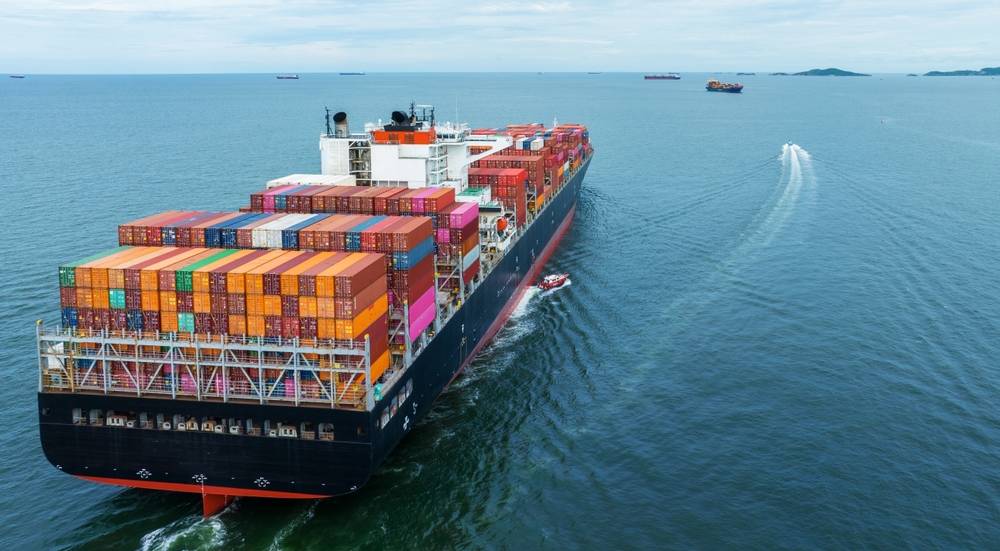
Ocean freight integrates with inland transport through coordinated port handling, customs clearance, and trucking or rail movement to ensure cargo reaches warehouses efficiently after arrival.
Cargo does not stop moving when a vessel docks. In many ways, that is where the real coordination begins.
Businesses often focus on the sea leg, the vessel, the transit time, and the cost. But what happens after arrival tends to shape the final delivery experience. At Progressive Cargo, we have seen how well-managed ocean freight services in USA depend heavily on what follows at the port.
The journey from port to warehouse is not a single step. It is a chain. And every link matters.
Once a shipment arrives at a US port, it enters a structured process. It may look routine, but timing and coordination are everything.
Any delay in one step affects the next. That is why working with an experienced ocean freight company in USA becomes important. The handoff between sea and land needs precision.
After clearance, cargo must move inland. This is where logistics shifts from maritime to ground operations.
The two primary modes used are:
In practice, many shipments use a combination of both. Containers may travel by rail to an inland hub, then continue by truck to the final warehouse.
It is easy to describe the process in steps. What matters more is how these steps connect in real time.
At Progressive Cargo, we focus on coordination rather than isolated services.
Without this level of planning, cargo may sit at ports longer than necessary. And time, in logistics, quickly turns into cost.
To visualise the journey, here is a simplified flow:
| Stage | Activity | Responsibility |
| Port Arrival | Container unloading | Port terminal |
| Clearance | Customs checks | Customs broker |
| Dispatch | Container pickup | Transport provider |
| Inland Movement | Truck or rail transit | Logistics partner |
| Final Delivery | Warehouse unloading | Warehouse operator |
Each stage may involve a different party. Integration ensures they work as one system.
For businesses operating between the US and Canada, inland transport becomes even more layered.
Cargo often moves across borders after arriving at US ports. This requires additional documentation and compliance checks.
We have worked on shipments where coordination extended beyond US transport networks, linking with partners such as a trucking company Calgary to ensure continuity.
These connections are not accidental. They are planned in advance to avoid disruption.
Even with planning, certain pressure points remain.
The goal is not to eliminate every delay. That is not always possible. The goal is to reduce uncertainty and respond quickly when issues arise.
Supply chains today are tighter. Expectations are higher.
Businesses want visibility. They want predictability. They want fewer surprises.
This is where integrated logistics makes a difference. Not just moving cargo, but managing the movement with awareness of the entire route.
Some of our clients begin to see this broader picture after exploring how ocean freight works across North American routes. It helps them understand that shipping is not just about one segment, but the full journey.
At Progressive Cargo, we treat ocean and inland transport as part of the same conversation.
We plan inland movement before the vessel even arrives. We align documentation, coordinate carriers, and keep communication steady throughout the process.
Because in reality, delays rarely come from a single point. They come from gaps between points.
And those gaps can be managed.
The strength of ocean freight services in USA lies not just in moving goods across oceans, but in how smoothly those goods continue inland.
From port terminals to highways and rail networks, every stage must connect without friction.
For businesses working across borders, especially those linked with a trucking company in Canada, this integration becomes even more critical.
At Progressive Cargo, we see logistics as a continuous journey, not separate steps. When each part works together, the entire system becomes more reliable.
Also Read:-
The Role Of Axle Configuration And Load Distribution In Heavy Haul Canada
Managing Time-Critical AOG Situations Through Global Aerospace Logistics
More Useful Links :-
Global Aerospace Logistics | Heavy Haul Trucking | Freight Forwarding